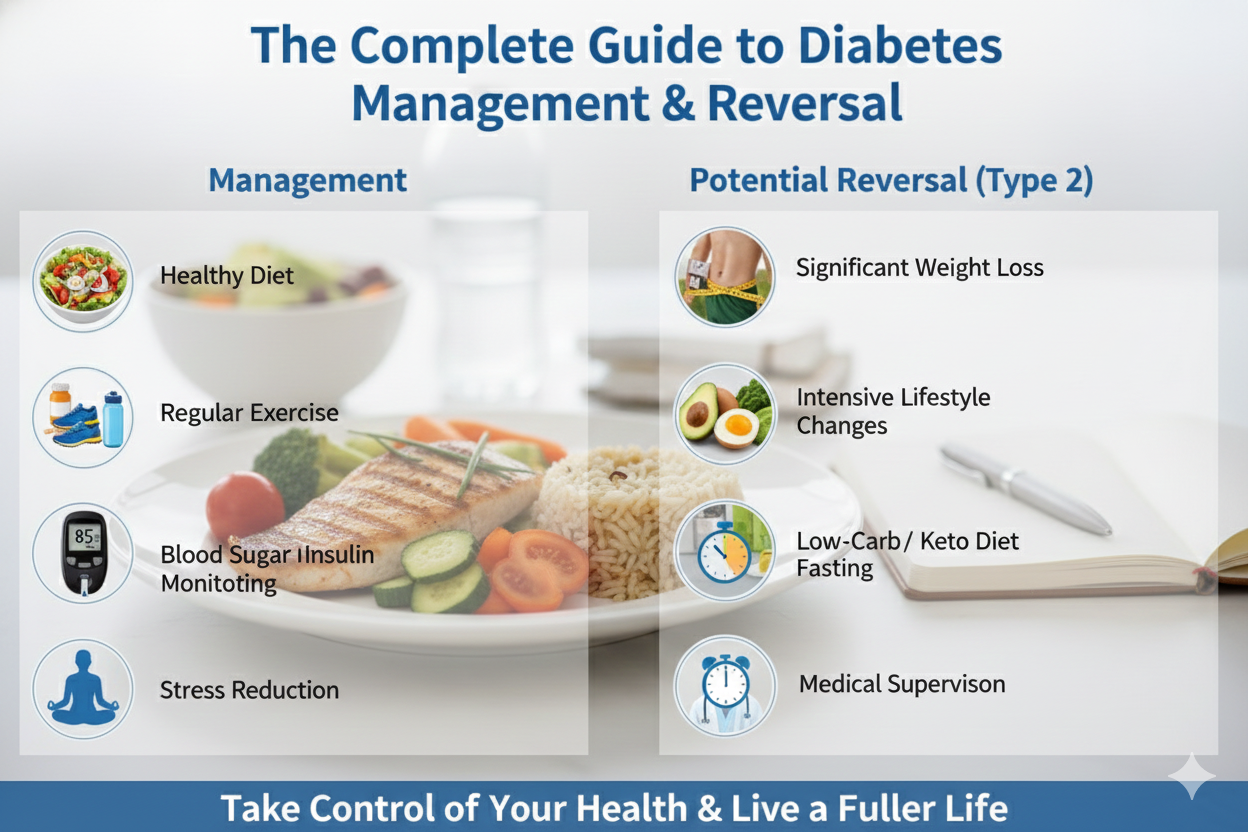
The Complete Guide to Diabetes Management & Reversal
Diabetes is a metabolic condition where blood sugar rises because
the body does not produce enough insulin or cannot use it effectively.
With early diagnosis, lifestyle changes, regular monitoring, and medical support,
many people with Type 2 diabetes can achieve excellent control and even reversal.
What is Diabetes?
Diabetes Mellitus is a chronic metabolic disorder affecting how the body regulates
blood glucose. It occurs when insulin production is insufficient or when the body
becomes resistant to insulin.
Insulin allows glucose to enter cells for energy. When insulin action fails,
glucose accumulates in the blood, damaging nerves, blood vessels, kidneys,
heart, and eyes over time.
Main Types of Diabetes
1. Type 1 Diabetes
- Autoimmune condition
- Usually begins in childhood or adolescence
- Requires lifelong insulin therapy
2. Type 2 Diabetes
- Most common form
- Caused by insulin resistance
- Most reversible when managed early
3. Gestational Diabetes
- Occurs during pregnancy
- Increases future Type 2 diabetes risk
This guide focuses mainly on Type 2 Diabetes, as it offers the
greatest opportunity for improvement and reversal.
Early Symptoms and Warning Signs
- Increased thirst and dry mouth
- Frequent urination (especially at night)
- Extreme fatigue and weakness
- Blurred vision
- Sudden weight loss or gain
- Frequent infections
- Slow-healing wounds
- Tingling or numbness in hands and feet
- Increased hunger even after meals
Early testing and treatment can prevent long-term complications.
What Causes Diabetes?
- Insulin resistance
- Obesity (especially abdominal fat)
- High-carbohydrate and sugar-rich diet
- Lack of physical activity
- Chronic stress and poor sleep
- Hormonal disorders (PCOS, thyroid)
- Family history
- Environmental and lifestyle factors
Initially, the pancreas compensates by producing more insulin.
Over time, it becomes exhausted.
How is Diabetes Diagnosed?
- Fasting Blood Sugar (FBS)
- Post-Prandial Blood Sugar (PPBS)
- HbA1c Test
- Oral Glucose Tolerance Test (OGTT)
- Continuous Glucose Monitoring (CGM)
| Test |
Normal |
Prediabetes |
Diabetes |
| Fasting |
< 100 mg/dL |
100–125 mg/dL |
126+ mg/dL |
| HbA1c |
< 5.7% |
5.7–6.4% |
6.5%+ |
Can Diabetes Be Reversed?
Type 2 diabetes can often be reversed, especially when detected early.
- Blood sugar returns to normal range
- Medications reduced or stopped
- Insulin sensitivity improves
- Metabolic health restored
Step-by-Step Diabetes Management & Reversal
1. Comprehensive Medical Assessment
- Current sugar levels
- Insulin resistance
- Hormonal imbalances
- BMI and waist circumference
- Lifestyle patterns
2. Personalized Nutrition Therapy
Recommended foods:
- Green leafy vegetables
- Millets & whole grains (small portions)
- Lentils and legumes
- Nuts and seeds
- Low-sugar fruits
- Eggs, fish, paneer, tofu
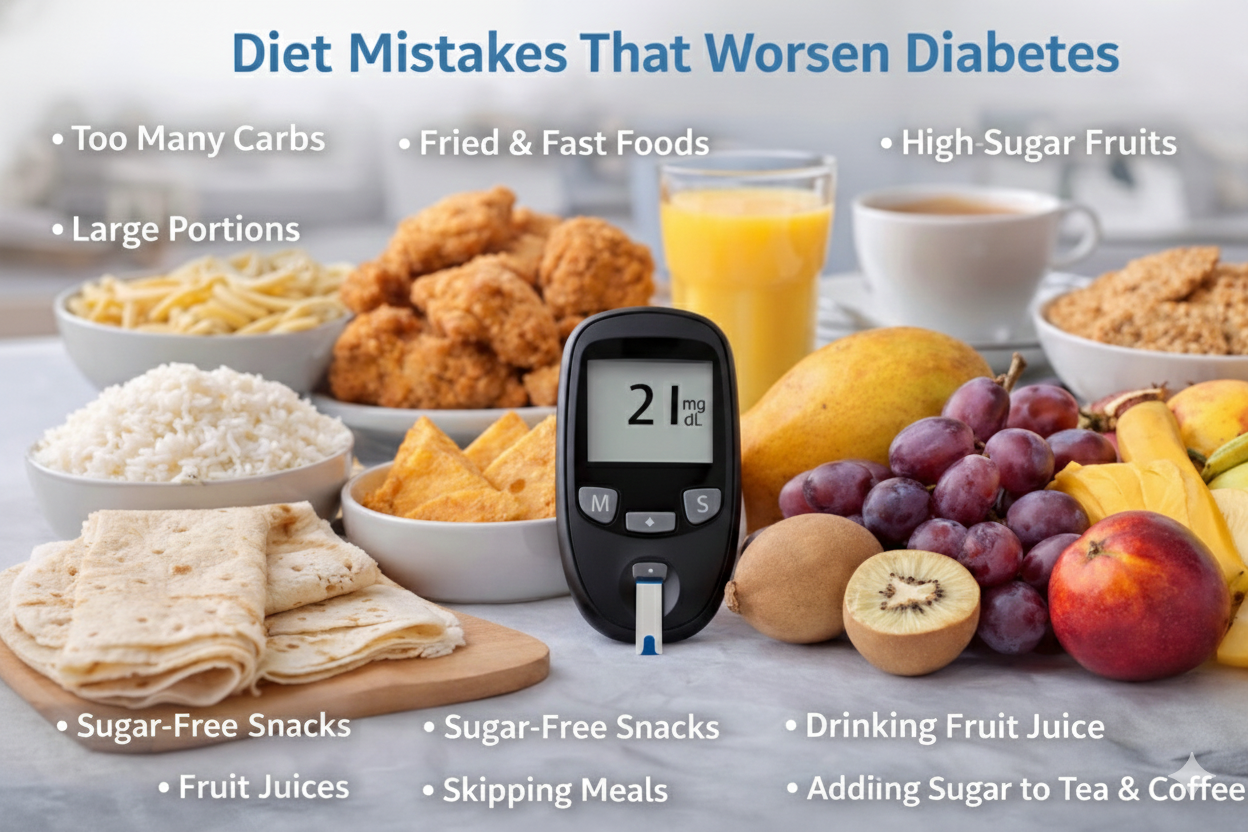
Foods to avoid:
- Sugar and jaggery
- White rice and maida
- Processed foods
- Sweets and bakery items
- Soft drinks and fruit juices
3. Physical Activity
- 30–45 minutes walking daily
- Strength training (3 days/week)
- Yoga and stretching
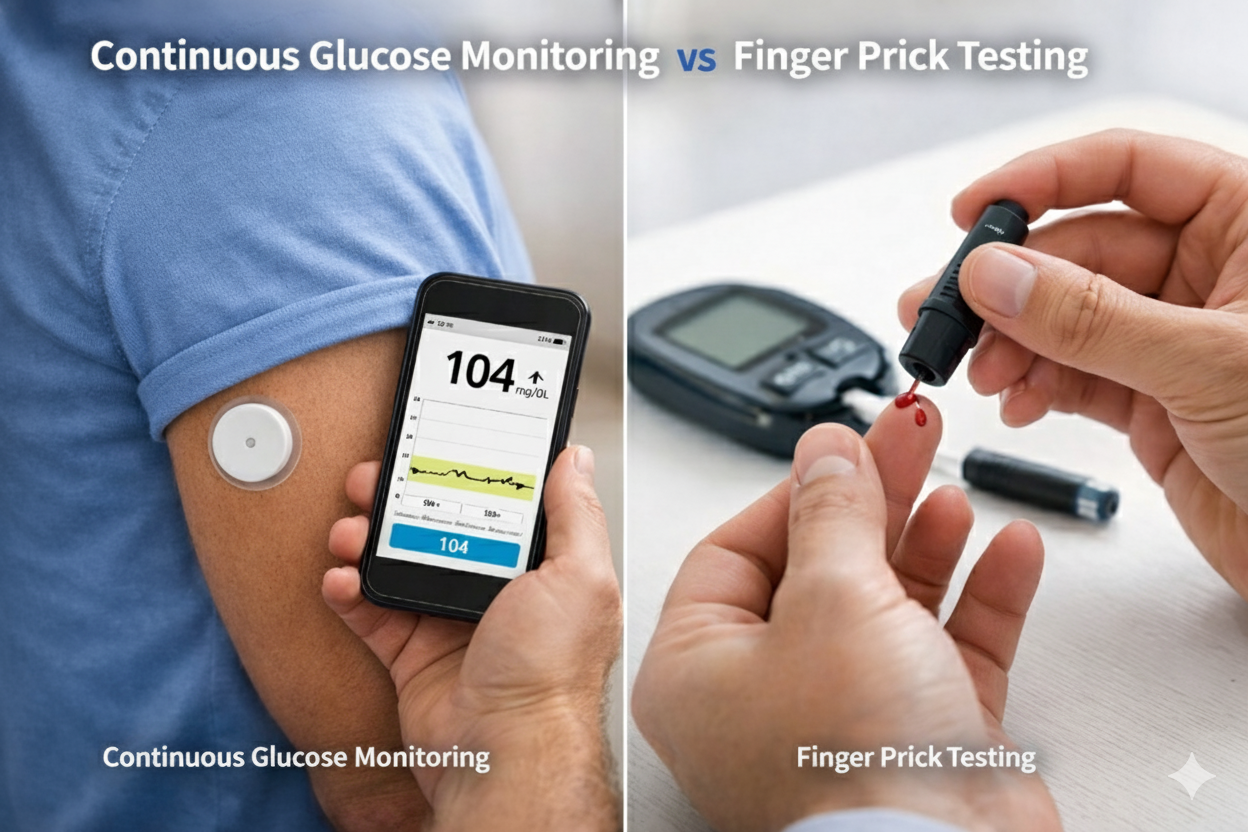
4. Blood Sugar Monitoring
- Glucometer
- CGM
- HbA1c monitoring
5. Medication or Insulin (if required)
Temporary medication or insulin protects organs while lifestyle changes work.
Advanced Factors Affecting Diabetes
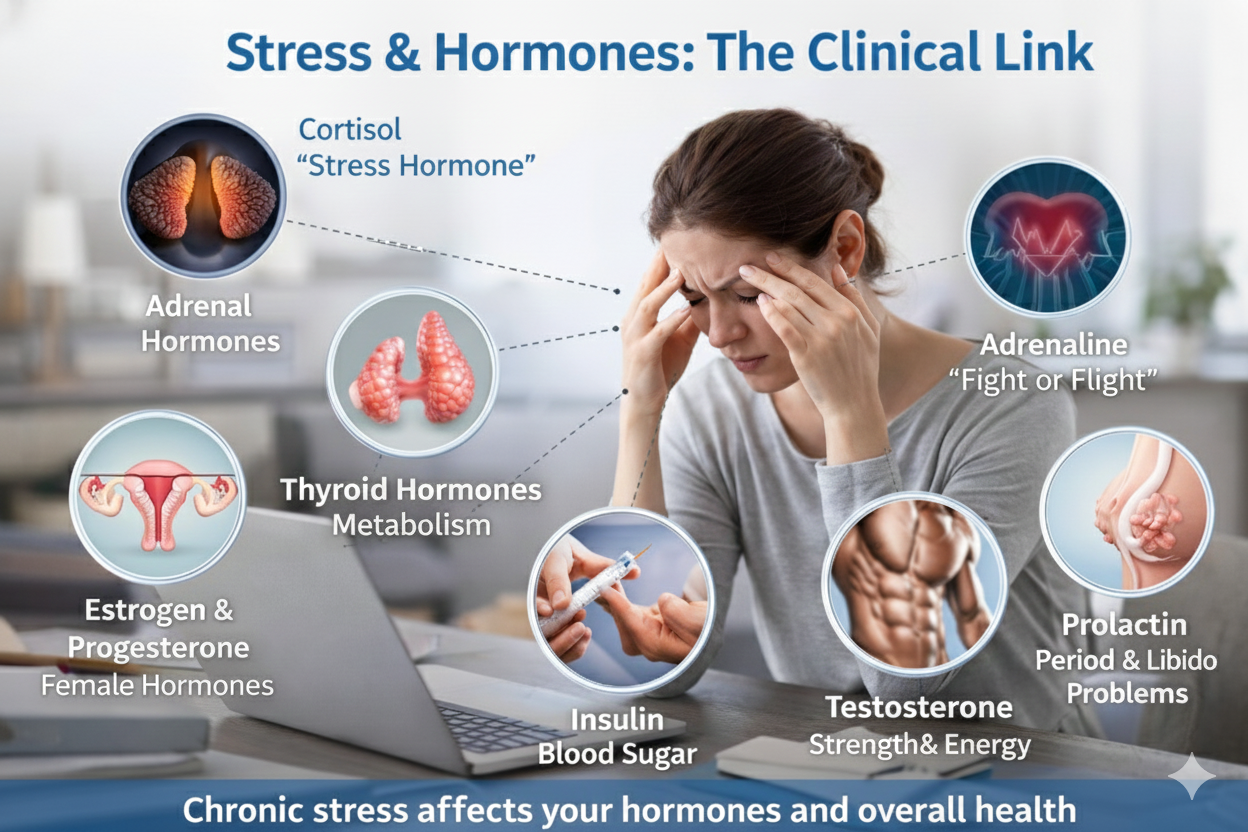
- Hormonal imbalance (thyroid, cortisol)
- Chronic stress
- Poor sleep
Complications of Uncontrolled Diabetes
- Heart disease & stroke
- Kidney damage
- Eye damage & blindness
- Nerve damage
- Erectile dysfunction
- Foot ulcers & amputations
Real Patient Scenarios
Case 1: HbA1c reduced from 8.9% to 6.1% in 6 months.
Case 2: Prediabetes reversed with weight loss and walking.
When Should You See an Endocrinologist?
- Fasting sugar > 100
- HbA1c > 5.7%
- Sudden weight changes
- PCOS or thyroid disorder
- Family history
Frequently Asked Questions (FAQs)
1. Can Type 2 diabetes be reversed permanently?
It can be controlled long-term with consistent lifestyle and medical care.
2. How long does reversal take?
Usually 3–12 months depending on stage.
3. Is insulin lifelong?
No. In many cases, it is temporary.
4. Can children get Type 2 diabetes?
Yes, especially with obesity.
5. Can stress increase blood sugar?
Yes, cortisol raises glucose levels.
6. Best exercise for diabetes?
Walking combined with strength training.
7. How often should sugar be tested?
Weekly initially, then monthly.
8. Is diabetes linked to PCOS?
Yes, insulin resistance is common in PCOS.
Conclusion
Diabetes management and reversal require early diagnosis, structured lifestyle
changes, regular monitoring, and medical guidance. With commitment and expert
care, many people can regain metabolic health and prevent complications.