Hormonal Causes of Unexplained Weight Gain | Endocrinologist in Secunderabad
2026-03-11 09:38:43
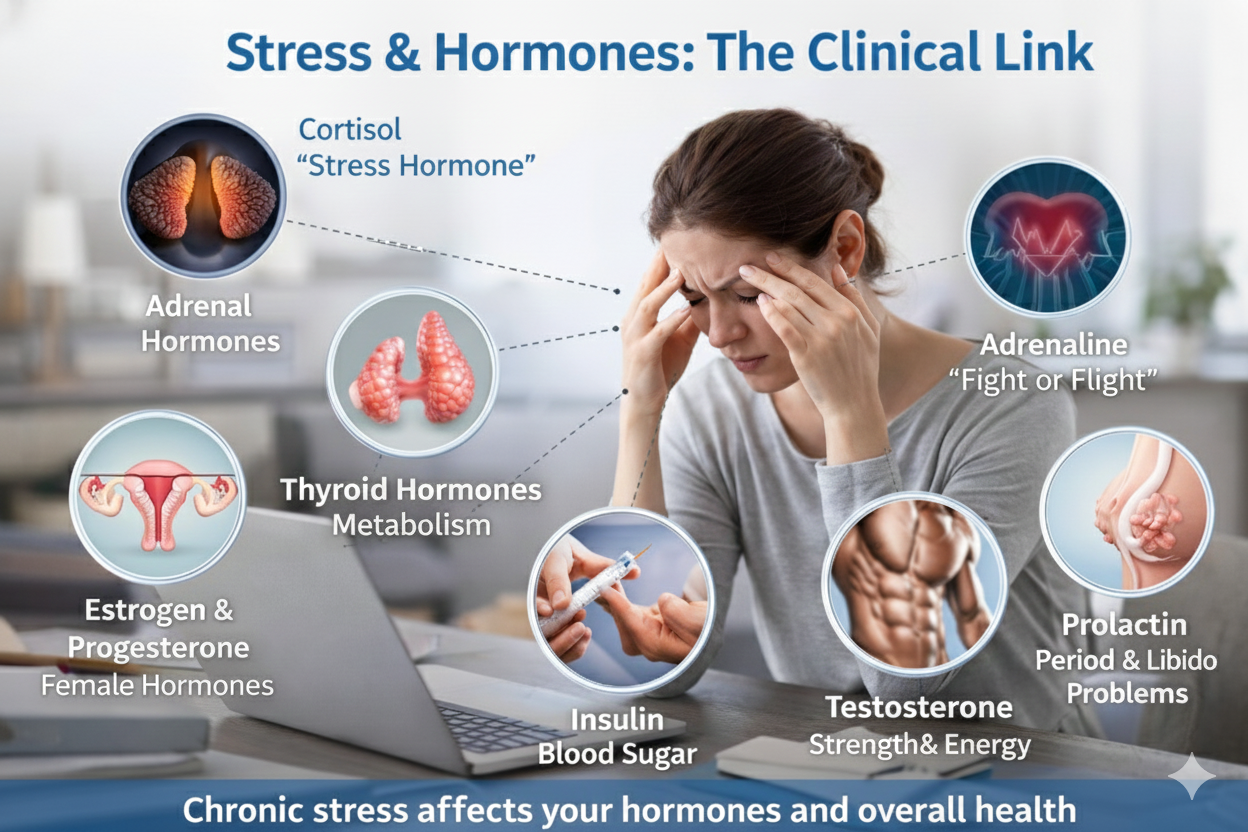
Stress directly affects key hormones such as cortisol, adrenaline, insulin, thyroid hormones, estrogen, and testosterone. Long-term stress disrupts metabolism, sleep, weight, immunity, and fertility, increasing the risk of chronic health problems.
Stress is not just an emotional response — it is a biological process that changes how hormones function in the body. Work pressure, relationship issues, financial stress, and unhealthy lifestyle habits can disturb the delicate hormonal balance responsible for metabolism, sleep, immunity, fertility, and mood.
Common questions patients ask include:
This article explains the clinical relationship between stress and hormones and how chronic stress can affect long-term health.
When the brain senses stress, it activates the HPA axis (Hypothalamus–Pituitary–Adrenal axis). This triggers a hormonal chain reaction involving:
As a result, stress affects the entire body — not just the mind.
Cortisol is the primary hormone released during stress.
Normal functions of cortisol:
Effects of chronic stress:
Does stress increase belly fat?
Yes. Elevated cortisol promotes fat storage around the abdomen.
Adrenaline is released during sudden or acute stress.
Immediate effects include:
Chronic adrenaline release may cause:
Which hormones are released during stress?
Cortisol and adrenaline play the most important roles.
Chronic stress interferes with thyroid hormones (TSH, T3, and T4).
Can stress cause thyroid imbalance?
Yes. Stress slows thyroid hormone activity.
Stress increases cortisol, which raises blood glucose and insulin levels.
Common signs:
Can stress raise blood sugar without diabetes?
Yes. Cortisol can elevate glucose even in non-diabetics.
Women are especially sensitive to stress-related hormonal imbalance.
Can stress affect menstrual cycles?
Yes. Stress disrupts ovulation.
Chronic stress reduces testosterone in both men and women.
Does stress reduce testosterone?
Yes. Long-term stress lowers testosterone levels.
Can stress increase prolactin?
Yes. Stress is a common trigger.
Frequently Asked Questions (FAQs)
1. Can stress cause hormone imbalance?
Yes
— stress affects cortisol, thyroid, insulin, estrogen, progesterone, and
testosterone.
2. Does stress cause weight gain?
Yes
— cortisol increases belly fat and hunger.
3. Can stress affect my menstrual cycle?
Yes
— stress disrupts ovulation and period regularity.
4. Can stress worsen thyroid problems?
Yes
— stress slows thyroid hormone conversion and increases symptoms.
5. How can I balance stress hormones
naturally?
Sleep
well, exercise, eat a balanced diet, and practice relaxation techniques.
Stress affects almost every major hormone in the body. If left untreated, it can lead to metabolic, reproductive, and mental health disorders. Understanding the stress–hormone connection allows early intervention. With proper lifestyle changes and medical care, stress-related hormonal imbalance can be reversed.